
Views: 0 Author: Site Editor Publish Time: 2026-01-28 Origin: Site
The market for heavy equipment has shifted significantly as we move through 2026. While the extreme volatility of previous years has settled, prices for lifting machinery remain elevated due to sustained tariffs on raw materials like steel and aluminum, alongside the engineering costs required for Euro VI and EPA Tier 4 compliance. For fleet managers and buyers, understanding these baselines is critical for budget planning.
To answer the primary question immediately: acquisition costs vary wildly based on capacity and integration. You can expect to pay anywhere from $15,000 for basic Pickup Crane kits to well over $500,000 for fully integrated, heavy-duty 90-ton units. The gap between these figures represents not just steel, but technology, certification, and hydraulic capabilities.
This guide goes beyond the sticker price. We analyze the total acquisition cost, including hidden import fees, logistics, and the Total Cost of Ownership (TCO) for both knuckle boom and telescopic configurations. We will help you navigate the complex financial landscape of acquiring a new or used Truck Mounted Crane in the current economic climate.
Base Price vs. Landed Cost: Why a $20,000 FOB import often costs $45,000+ to put to work (tariffs, taxes, certification).
New vs. Used Delta: Used units (5-10 years old) currently trade at 50–60% of new value, but maintenance costs spike after 2,500 hydraulic hours.
Lead Times: New unit delivery windows are 6–12 months; plan for interim rental costs.
Tech Premium: Telematics and load moment indicators (LMI) now add $5k–$25k to the sticker price but reduce insurance risks.
Pricing in 2026 is strictly segmented by lifting capacity and the level of chassis integration. Buyers must distinguish between the cost of the "upper structure" (the crane itself) and the fully mounted unit including the truck chassis. The figures below reflect estimated domestic dealer pricing unless specifically noted as an import.
For utilities, HVAC placement, and light contracting, lightweight units offer high utility without the need for CDL-class chassis. The cost range for this segment sits between $8,000 and $50,000.
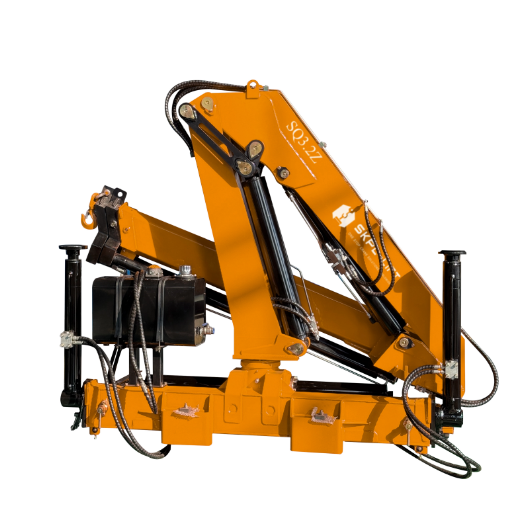
At the lower end, you find electric or small hydraulic units designed for mounting on service bodies. A Pickup Crane often serves as the most cost-effective solution for mobile service mechanics. However, buyers must be wary of direct imports.
You may find listings for "FOB China" units priced at $8,000 to $14,000. While tempting, these units frequently lack OSHA or ANSI certification. Without domestic warranty support, a minor hydraulic failure can render the asset useless for weeks. Always verify if the listed price includes the necessary stability testing and sub-frame reinforcement.
This category represents the standard "Boom Truck" setup used in construction and logistics. Prices here range from $100,000 to $280,000, depending heavily on the boom configuration and chassis selection.
| Feature | Knuckle Boom Crane | Telescopic Boom Crane |
|---|---|---|
| Upfront Cost | 10–15% Higher | Lower Entry Cost |
| Mechanism | Complex Hydraulics (Articulating) | Straight Linear Extension |
| Primary Advantage | Versatility in tight spaces | Vertical reach & simple maintenance |
The choice between configurations impacts your budget significantly. A Knuckle Boom Truck Mounted Crane typically commands a higher premium. The complex geometry of the articulation requires more hydraulic cylinders and sophisticated controls. However, for urban deliveries where the crane must maneuver payloads through windows or around obstacles, this premium is justified by operational efficiency.
Conversely, a Telescopic Boom Truck Mounted Crane offers a lower entry price. It remains the preferred choice for general lifting where vertical reach is the priority. Maintenance is generally simpler due to fewer moving parts in the boom structure.
For heavy industrial applications, costs escalate rapidly, ranging from $300,000 to over $700,000. Market data indicates that a new 50-ton model often averages $150,000 to $200,000 for the upper structure alone, excluding the truck chassis.
Once you factor in a suitable heavy-duty chassis and integration labor, a fully operational unit rarely leaves the lot for under $500,000. Premium features drive this price further. Adding jib extensions, man-baskets, and advanced remote-control packages can easily add another $50,000 to the final invoice. These machines often rival the capabilities of a dedicated Mobile Crane but retain the highway speed advantage of a standard truck.
Deciding between new and used equipment is no longer just about budget; it is about risk management. The depreciation curves and maintenance realities in 2026 have shifted from historical norms.
New equipment typically sees a sharp value drop, often 30–40%, within the first three years. However, this depreciation buys you warranty security. Used equipment follows a slower depreciation curve, preserving residual value better, but it comes with higher operational expenditures (OpEx).
Supply chain constraints have created an unusual market dynamic. Due to lead times of 6–12 months for new units, late-model used units (1–3 years old) are trading at near-new prices. Buyers are paying a premium for immediate availability, effectively erasing the traditional savings associated with buying slightly used gear.
Case data reveals a "maintenance cliff" that buyers must anticipate:
New Units: Maintenance for the first two years averages roughly $2,000, mostly covering consumables like filters and fluids.
Used Units (>5000 hours): Costs spike significantly. You risk facing a major hydraulic overhaul ($12,000+) or emissions system failures, such as DPF replacements.
We recommend a simple decision framework: If your utilization exceeds 70%, buy new to minimize downtime risks. If utilization is under 40%, buying used or exploring rental options protects your capital.
The advertised price is rarely the final cost to deploy. Senior buyers must budget for the "invisible fees" that accompany heavy machinery acquisition.
Regulatory compliance is not optional. An annual OSHA/ANSI inspection typically costs between $1,500 and $2,500. More critically, if you purchase an imported used rig, third-party certification is often mandatory for job site access. Initial certification for these units can cost up to $15,000, a fee often discovered only after the purchase is made.
Transporting heavy machinery is expensive. Moving a 90-ton unit cross-country or importing it can cost $10,000 to $12,000 in freight alone. Furthermore, assembly is not a plug-and-play affair. Mounting a crane kit to a chassis requires sub-frame reinforcement, PTO installation, and rigorous stability testing. This labor and parts bill frequently exceeds $20,000.
Modern safety standards drive up costs. Telematics hardware now costs $5,000 to $25,000, plus monthly subscriptions. Advanced 3D guidance systems can add $15,000 to $45,000 to the sticker price. While expensive, these systems improve operator efficiency by approximately 20% and can reduce insurance premiums.
The temptation to bypass domestic dealers in favor of direct imports is high, but the financial reality is complex.
Listings on B2B platforms like Alibaba often show 12-ton cranes for roughly $22,000 FOB (Free On Board). This appears to be a bargain compared to domestic prices. However, the "Landed Cost" is the only metric that matters.
Once you add a 25% Section 232 tariff (for US-based buyers), roughly 15% for shipping and insurance, and another 10% for port fees and customs brokerage, the advantage evaporates. The final cost often doubles the initial list price, bringing it dangerously close to domestic pricing without the support network.
Domestic dealers like Manitex, Terex, or Link-Belt absorb these import headaches for you. The critical metric here is parts availability. When a seal fails, can you get a kit in 24 hours, or will you wait 4 weeks for a shipment from overseas? Downtime costs usually outweigh the initial savings of a grey-market import.
Warranty is another differentiator. Domestic standards range from 1 to 5 years. In contrast, grey-market imports often come with "parts-only" warranties that are notoriously difficult to claim effectively.
High interest rates have reshaped the buy vs. rent calculation. Financing a $300,000 unit at 7% over five years adds approximately $55,000 in interest costs compared to rates seen in 2021. This necessitates a stricter ROI analysis.
Consider the math for a 30-ton crane. Daily rental rates hover between $800 and $1,500. A monthly lease payment for a purchased unit might range from $4,500 to $6,000. A good rule of thumb: If you use the crane fewer than 10 days a month, rental is generally more capital-efficient. It frees up cash flow and transfers maintenance risks to the rental agency.
Operational costs can offset financing pain. Newer Tier 4/Euro VI engines or Hybrid PTO systems, such as Hiab’s electric options, can reduce fuel spend by 20–30%. Over a five-year period, these savings can effectively offset the higher monthly payments associated with newer, more expensive machines.
Prices for truck mounted cranes in 2026 are undeniably higher, yet they are justified by significant leaps in safety technology and operational efficiency. The market has stabilized, but the days of cheap heavy iron are gone. Buyers must now focus on Total Cost of Ownership rather than just the acquisition price.
For critical path projects where downtime is unacceptable, we advise prioritizing dealer support over the lowest FOB price. The ability to source parts overnight is worth the premium. When soliciting bids, do not settle for a simple product price list.
Action Step: Specifically request a "Landed Cost Quote" that includes all tariffs, delivery fees, and certification costs to ensure you are comparing apples to apples.
A: The price varies based on chassis integration. A new 50-ton model generally costs between $150,000 and $500,000. The lower end covers the crane structure alone, while the higher end reflects a fully integrated unit on a premium chassis. Used models typically trade between $60,000 and $120,000, depending on engine hours and hydraulic condition.
A: Reliability depends on the brand tier. Tier 1 manufacturers like SANY and XCMG offer reliability comparable to Western brands and have established global support networks. However, unbranded generic units found on B2B marketplaces often suffer from poor quality control, lack of parts availability, and inconsistent warranty support.
A: The main difference lies in mobility and setup. A Mobile Crane (often all-terrain or rough-terrain) is optimized for heavy lifting on-site but may require transport trailers. A truck mounted crane is built on a standard commercial chassis, allowing it to travel at highway speeds and set up quickly, making it ideal for multi-site jobs.
A: Yes. Operating the truck itself usually requires a Commercial Driver’s License (CDL) if the Gross Vehicle Weight Rating (GVWR) exceeds 26,000 lbs. Operating the crane mechanism typically requires certification from the NCCCO (National Commission for the Certification of Crane Operators) or a similar accredited body, depending on local regulations.


