
Views: 0 Author: Site Editor Publish Time: 2026-03-11 Origin: Site
Truck-mounted cranes have become an indispensable tool in modern construction and industry. Their ability to combine lifting power with mobility has revolutionized the way lifting tasks are performed in various sectors. This article explores the many advantages of truck-mounted cranes, their applications, challenges, and future developments. By understanding their key features, benefits, and limitations, you’ll be able to make an informed decision about how and when to use them for your projects.
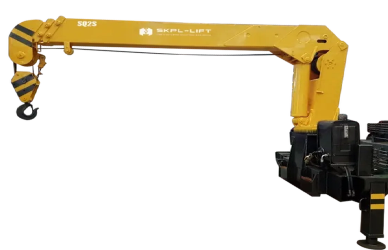
A truck-mounted crane is a type of lifting machine mounted directly on a truck chassis, which allows it to move easily between job sites while performing lifting tasks. The crane uses a hydraulic system to generate lifting power, enabling it to extend its boom, hoist loads, and complete various other tasks like material handling and heavy lifting. This combination of mobility and power makes truck-mounted cranes a valuable asset for projects that require both flexibility and high lifting capacity.
Hydraulic System: The hydraulic system powers the crane’s boom and provides the force needed for lifting. Hydraulic fluid is pushed through cylinders, causing the boom to move vertically or extend.
Boom Design: Truck-mounted cranes typically feature telescopic booms, which extend and retract to give the crane a greater range of movement. In some models, knuckle booms allow for articulation in tight spaces, offering more versatility.
Stabilizers: To ensure the crane operates safely during lifting tasks, stabilizers (or outriggers) are deployed to extend from the truck and provide a stable base. These stabilize the crane and prevent tipping, especially when lifting heavy loads.
Load Capacity: Truck-mounted cranes can lift anywhere from 2 tons to 80 tons, depending on the model. The lifting capacity varies by crane type and design, with larger models able to handle heavier loads and operate at greater heights.
The most significant advantage of truck-mounted cranes is their mobility. Being mounted on a truck chassis means these cranes can travel easily between different job sites, reducing transport costs and time. In addition, truck-mounted cranes are known for their efficiency and cost-effectiveness due to their ability to quickly deploy and get to work, saving both money and labor.
One of the primary benefits of truck-mounted cranes is their mobility. Unlike traditional cranes that need to be assembled and transported separately to each job site, truck-mounted cranes are ready for operation as soon as they arrive at the location. This means less setup time, which is especially useful when working on multiple job sites or urgent tasks.
Truck-mounted cranes are also designed to be operated on public roads, allowing them to reach locations that may be difficult for larger, stationary cranes. Their compact size allows them to fit into narrow or restricted spaces, which is an important feature for urban construction projects or any site where space is limited.
Truck-mounted cranes are cost-effective because they combine two critical functions: mobility and lifting power. They are significantly cheaper to operate than larger, more specialized cranes, and their quick setup time reduces labor costs. Since truck-mounted cranes do not require a lot of preparation time or extra equipment, they are particularly ideal for smaller-scale operations where budget and efficiency are key factors.
Truck-mounted cranes are incredibly flexible. Whether you need to move equipment around a construction site, lift materials onto a high building, or load cargo, these cranes can handle a wide range of tasks. Their versatility comes from the ability to adjust the boom’s angle, reach, and extension, allowing them to perform complex lifting operations in a variety of environments.
In the construction industry, truck-mounted cranes are used for lifting and placing heavy materials, equipment installation, and supporting structural assembly. They are crucial in situations where high mobility and fast deployment are required. From lifting steel beams to moving concrete panels and roofing materials, truck-mounted cranes offer flexibility in handling multiple construction tasks.
Truck-mounted cranes are frequently used in logistics for tasks like loading and unloading materials, moving large cargo, or managing warehouse operations. Their mobility makes them well-suited for transportation and delivery operations that require crane capabilities without the need for complex setups or the space required by larger cranes.
In the energy sector, truck-mounted cranes are vital for lifting heavy machinery, such as transformers, turbines, and other equipment used in power plants and substations. Their ability to operate in areas where access may be challenging and quickly transport materials to different parts of the site makes them invaluable in energy infrastructure projects.
Truck-mounted cranes are also used in emergency services for rapid deployment in rescue operations. They are particularly useful in disaster recovery situations, where debris must be cleared quickly and heavy loads need to be moved to assist in rescue efforts. Their mobility allows them to reach disaster sites faster than stationary cranes, making them essential for search-and-rescue missions or recovery operations.
While truck-mounted cranes offer numerous benefits, they also come with certain challenges that must be considered before use.
One of the biggest factors affecting the choice of a truck-mounted crane is site conditions. For projects in areas with rough terrain or limited access, a truck-mounted crane may struggle unless it is specifically designed for off-road capabilities. The use of additional stabilizing equipment may also be necessary for ensuring safe operation.
While truck-mounted cranes are powerful, they have certain load limits based on their design and size. It’s important to choose the right crane based on the specific load requirements of your project. For particularly heavy or oversized loads, a larger hydraulic crane may be necessary.
Truck-mounted cranes require regular maintenance to ensure safe and efficient operation. Components such as the hydraulic system, boom, and stabilizers should be checked frequently for wear and tear. Routine inspections are essential for identifying potential issues before they become costly problems.
As technology continues to evolve, so does the design and capability of truck-mounted cranes. Innovations in hydraulics, safety systems, and boom technology are continually improving the functionality and efficiency of these cranes. With the growing need for sustainability in the construction and logistics industries, we can expect future models to be more fuel-efficient and eco-friendly, with smarter systems to enhance safety and performance.
Furthermore, emerging markets are seeing an increase in demand for truck-mounted cranes as developing countries build infrastructure and expand urban areas. These cranes are essential tools in developing economies, where rapid construction and logistics are required.
Truck-mounted cranes can typically lift between 2 tons and 80 tons, depending on the model and design. Larger models, such as those with reinforced booms and hydraulic systems, can handle even heavier loads, making them suitable for industrial and construction use. These cranes are designed to meet the needs of a variety of lifting tasks, from smaller projects to large-scale construction or energy sector applications.
Truck-mounted cranes are designed for quick deployment. Once the crane reaches the job site, it typically requires minimal setup. After the stabilizers are deployed, the crane can be ready for operation within minutes. This fast setup time is particularly useful for projects that require rapid lifting and efficient use of time, such as in construction or logistics operations.
Yes, truck-mounted cranes are ideal for tight spaces due to their compact size and flexible boom design. These features make them highly effective for urban construction or jobs in restricted areas where larger cranes may not fit. The ability to maneuver in confined spaces and their quick deployment makes truck-mounted cranes a popular choice for complex lifting tasks in such environments.
Regular maintenance is crucial for ensuring the safety and efficiency of a truck-mounted crane. This includes checking the hydraulic system for leaks or damage, inspecting the boom and stabilizers for wear and tear, ensuring proper fluid levels (including hydraulic fluid and engine oil), and performing routine safety checks to ensure all systems are working as they should. Additionally, operators should conduct visual inspections before each use to catch any potential issues before operation. Routine maintenance schedules help extend the life of the crane and avoid costly repairs or downtime.
Truck-mounted cranes are essential tools in a variety of industries due to their mobility, cost-effectiveness, and flexibility. From construction to logistics and energy projects, their ability to move quickly between job sites and perform heavy-duty lifting tasks makes them invaluable assets. Despite some challenges, such as load capacity limits and the need for regular maintenance, truck-mounted cranes provide a high level of efficiency and versatility for various lifting tasks. As technology advances, we can expect these cranes to become even more efficient and capable, further enhancing their role in modern industry.


