
Views: 0 Author: Site Editor Publish Time: 2026-03-03 Origin: Site
A truck mounted crane is a versatile lifting machine mounted on a truck chassis, designed to provide mobility and flexibility in a variety of industries. These cranes combine the power of heavy-duty lifting equipment with the convenience of a mobile base, making them indispensable in numerous applications. In the construction sector, truck mounted cranes are used to lift and move materials, install equipment, and assist with structural assembly. In logistics, they play a vital role in loading and unloading cargo, while in industrial settings, they help with the installation and maintenance of heavy machinery. Their ability to quickly move from one site to another and perform complex lifting tasks makes truck mounted cranes an essential tool in many fields, providing both efficiency and cost-effectiveness.
A truck mounted crane is a type of crane that is mounted on a truck chassis, enabling it to move quickly between work sites. It combines the mobility of a truck with the lifting power of a crane, making it a versatile solution for various lifting tasks in construction, logistics, and industrial sectors.
The truck mounted crane consists of several key components:
Truck Chassis: The base vehicle that supports the crane, providing mobility. This chassis can be a flatbed truck or a specialized truck designed for crane operation.
Crane Boom: The long arm of the crane that extends to lift heavy loads. It can be a telescopic boom (extends and retracts) or a knuckle boom (articulates in multiple directions).
Hydraulic System: A system of hydraulic cylinders and pumps that provide the lifting power and enable the crane’s boom to move. Hydraulic systems are crucial for controlling the movement of the boom, extension, and lifting capacity.
Stabilizers: These are deployed to stabilize the crane during lifting. They are usually outriggers that extend from the base of the truck to the ground, providing balance and preventing tipping during operations.
Control System: A series of levers, joysticks, or digital controls that allow the operator to manipulate the crane’s movements precisely.
Truck mounted cranes are designed for a variety of tasks, including lifting, lowering, and positioning heavy loads. The hydraulic system allows the boom to move vertically and horizontally, while the stabilizers ensure that the crane remains stable when lifting heavy loads. The design allows for quick setup and operation, enabling it to be used efficiently in dynamic environments where mobility is key. This combination of flexibility, power, and speed makes truck mounted cranes ideal for tasks that require both lifting and transport capabilities, such as lifting materials onto construction sites or moving equipment in warehouses.
While truck mounted cranes share similarities with other types of cranes, they are distinguished by their mobility and design:
Mobile Cranes: These are also designed to move between sites, but they are typically mounted on specialized, wheeled or tracked vehicles (not standard trucks). Mobile cranes are larger and more capable of handling extreme lifting tasks, making them suitable for heavy-duty projects. However, they often require more time and space for setup compared to truck mounted cranes.
Crawler Cranes: These cranes are mounted on tracks instead of wheels, which provide greater stability and allow them to work in more rugged terrain. Crawler cranes are typically larger and used for more substantial, heavy-lifting tasks that require stability in challenging environments. Unlike truck mounted cranes, crawler cranes are less mobile and usually need to be transported on lowboy trailers.
Truck mounted cranes are equipped with several key features that make them versatile and efficient for a wide range of lifting tasks. Below are the primary features:
The hydraulic system powers the crane’s lifting and extension. Hydraulic fluid is pumped into cylinders to generate force, lifting the boom and extending it for greater reach. This system allows for smooth and precise control during lifting tasks.
Boom: The crane’s boom, whether telescopic (extends/retracts) or knuckle (articulates), is used to lift and place loads. It provides the crane’s reach and lifting capacity.
Stabilizers: These hydraulic arms extend horizontally to stabilize the crane during lifting, preventing tipping. They distribute the load evenly and ensure safety during operation.
Truck mounted cranes can handle loads from 2 tons to 80 tons, depending on the model. Light-duty models (2-10 tons) are used for smaller tasks, while heavy-duty models (30-80 tons) handle large construction and industrial jobs. The load capacity determines the crane's suitability for different tasks.
Truck mounted cranes are highly mobile due to their truck chassis, allowing them to quickly move between job sites. Their compact design lets them access tight spaces, and some models are equipped for off-road conditions. This mobility makes them ideal for jobs requiring rapid setup and transport.
Truck mounted cranes come in various types, each suited for different lifting tasks:
The knuckle boom crane has a multi-jointed arm, making it compact and ideal for tight spaces. Its flexibility allows for precise control and is perfect for urban construction or logistics, where maneuverability and versatility are key.
The telescopic boom crane features an arm that extends and retracts, providing greater reach and height. It's used for tasks that require lifting to significant heights or across long distances, offering more flexibility for construction projects.
Specialized models are designed to lift heavier loads or handle specific tasks like lifting heavy machinery or transformers. These cranes are built for demanding industrial or construction jobs, offering enhanced power and stability.
Truck mounted cranes are versatile and used in various industries for different tasks:
In the construction industry, truck mounted cranes are used for lifting and placing materials like steel beams, concrete panels, and other heavy construction equipment. Their ability to move quickly between sites makes them essential for equipment installation and material handling on construction projects.
In logistics, truck mounted cranes assist in loading and unloading containers at warehouses, shipping yards, and docks. Their mobility allows them to be deployed quickly in different locations, helping with inventory management and improving overall operational efficiency in warehouse operations.
In the energy sector, these cranes are used for lifting heavy machinery like transformers, turbines, and large electrical equipment. Their robust lifting capacity and ability to work in remote areas make them ideal for power plant installations and energy infrastructure maintenance.
Truck mounted cranes are also critical in emergency response situations. Their ability to quickly reach disaster sites and lift heavy debris makes them useful in rescue missions or clearing areas after natural disasters, ensuring quick and effective recovery operations.
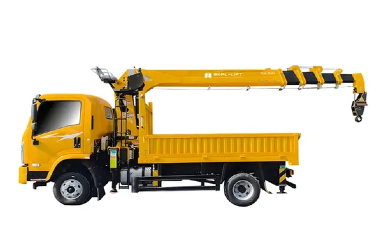
Truck mounted cranes offer several key benefits that make them a popular choice across industries:
Truck mounted cranes are highly mobile, allowing them to move quickly between different job sites. Their compact design enables easy access to tight spaces, and they are quick to set up, reducing downtime and improving operational efficiency.
By combining the lifting power of a crane with the mobility of a truck, these cranes help reduce the need for additional equipment and labor. This cost-effective solution minimizes transportation costs, setup time, and the need for large crews, allowing businesses to complete projects faster and more efficiently.
Truck mounted cranes are equipped with various safety features, such as stabilizers to prevent tipping, overload protection systems, and emergency stop functions. These features ensure safe operation, reducing the risk of accidents during lifting tasks and protecting workers on-site.
Proper maintenance and care are essential to ensure the safe and efficient operation of truck mounted cranes. Regular upkeep helps prevent malfunctions and extends the crane's lifespan.
Routine maintenance includes:
Hydraulic system checks: Inspecting hoses, cylinders, and pumps for leaks or wear.
Boom inspection: Checking for cracks, corrosion, or damage to ensure the boom remains strong and functional.
Stabilizer inspection: Ensuring the stabilizers are operating correctly and free of damage.
Control systems: Verifying that all controls, lights, and safety systems are working properly.
Fluid levels: Monitoring hydraulic fluid and engine oil levels to ensure smooth operation.
Regular maintenance helps avoid sudden failures, reducing downtime and improving safety on-site.
Using certified technicians is crucial for the proper maintenance and repair of truck mounted cranes. Certified professionals are trained to:
Accurately diagnose issues
Perform complex repairs to manufacturer standards
Ensure compliance with safety regulations and certification requirements
Certified technicians ensure that all repairs and maintenance are done correctly, minimizing risks and ensuring the crane operates at peak performance.
A truck mounted crane can lift anywhere from 2 tons to 80 tons, depending on the model.
While both are mobile, truck mounted cranes are designed to be mounted directly on a truck, offering more flexibility for quick setup in various locations.
Truck mounted cranes are ideal for most terrains, but specific models with larger wheels or crawler systems are better for off-road conditions.
Regular inspection of the hydraulic system, boom, stabilizers, and safety features is essential to ensure the crane operates safely and efficiently.
Truck mounted cranes offer numerous benefits, including mobility, cost-effectiveness, and safety, making them essential tools in industries such as construction, logistics, energy, and emergency services. Their flexibility allows for quick deployment across various job sites, while their efficient use of resources reduces both time and labor costs. With advanced safety features, truck mounted cranes ensure secure operations, minimizing accidents on-site. As industries continue to grow and evolve, the demand for these cranes will only increase. The future of truck mounted cranes looks promising, with advancements in technology likely leading to greater lifting capacities, improved fuel efficiency, and more sophisticated safety systems, making them even more indispensable for handling complex tasks in diverse sectors.


