
Views: 0 Author: Site Editor Publish Time: 2026-09-05 Origin: Site


Deploying mismatched lifting equipment to a job site causes immediate operational delays and safety liabilities. Project managers constantly balance heavy lift capacity requirements against the need for rapid highway mobility, tight job site access, and multi-role utility. Selecting the wrong machine halts progress and forces unnecessary mobilization. You must objectively evaluate a purpose-built truck crane against a commercial boom truck based on structural architecture and load charts. Understanding these core differences ensures you match the equipment to the specific demands of your project. The right choice maximizes utilization rates while maintaining strict safety standards. We will break down the technical specifications, transit capabilities, and site footprint of both machines. This guide provides the field-level data needed to spec the correct crane for your next lift.
Architectural Foundation: A boom truck mounted crane utilizes a standard commercial truck chassis, whereas a truck crane is engineered from the ground up with a purpose-built carrier.
Capacity vs. Mobility: Truck cranes offer superior lifting capacity and reach for heavy-duty applications; boom trucks provide unmatched highway speeds, compact footprints, and material hauling capabilities.
Maintenance and TCO: Commercial chassis components for boom trucks are generally easier and more cost-effective to source and service than specialized truck crane parts.
Regulatory Compliance: Both require strict adherence to DOT weight regulations and operator certifications, but specific CDL and NCCCO requirements vary based on the equipment's gross vehicle weight rating (GVWR) and configuration.
A Boom Truck Mounted Crane integrates a hydraulic crane unit directly onto a standard commercial truck chassis. Manufacturers build these machines using familiar Class 7 or Class 8 truck platforms. The truck itself remains largely identical to standard heavy-duty haulers. The crane components bolt onto the reinforced frame of the commercial vehicle. This creates a hybrid machine capable of both driving and lifting.
The crane operates via a hydraulic pump driven by the truck's transmission Power Take-Off (PTO). The standard truck engine powers both highway travel and lifting operations. Operators must understand how to engage the PTO safely and manage engine RPMs during a lift. Control stations vary, ranging from simple stand-up controls at the pedestal to enclosed swing cabs or wireless radio remotes.
Mounting configurations vary based on operational needs.
Behind-cab mounts place the crane directly behind the truck cab. This setup maximizes rear flatbed space for hauling materials.
Rear-mounts position the crane at the back of the chassis. This allows the operator to reach further behind the vehicle.
Tractor-mounts integrate the crane near a fifth-wheel hitch. Operators use this configuration to haul long trailers while retaining lifting capabilities.
These machines excel in specific applications. Utility companies use them for setting poles and transformers. Roofing contractors rely on them to hoist pallets of shingles directly to the roofline. Residential construction crews use them to set roof trusses. You can drive them off the highway and immediately begin lifting operations. The primary design advantage is payload retention. You maintain usable flatbed space. A crew can load materials at the yard, drive to the site, and hoist those same materials into place. This eliminates the need for a separate delivery vehicle.
A purpose-built truck crane represents a single, cohesive unit designed strictly for lifting. Engineers design the carrier and the crane together from the ground up. The lower chassis does not originate from a commercial truck assembly line. The frame features heavy steel reinforcements designed to handle massive vertical and torsional loads. Every component serves the singular goal of maximizing lifting capacity.
Many large truck cranes utilize two separate engines. The lower engine drives the carrier down the highway. The upper engine sits in the crane superstructure and powers the hydraulic lifting circuits. This dual-engine design ensures maximum power for both travel and lifting, but requires maintaining two separate powerplants.
You must distinguish a standard truck crane from an All-Terrain (AT) crane. Both are purpose-built machines. However, standard truck cranes are optimized for highway travel. They feature standard suspension systems and highway-rated tires. All-Terrain cranes utilize complex multi-axle steering and specialized off-road suspensions. Truck cranes travel efficiently on paved roads but struggle in deep mud. AT cranes navigate rough terrain but travel slower on highways.
Truck cranes dominate heavy-duty applications. You will see them on commercial construction sites hoisting steel I-beams. Infrastructure projects use them to set concrete bridge girders. They handle high-reach steel erection and heavy mechanical equipment placement. When a project requires moving massive tonnage at a wide radius, a purpose-built crane is mandatory.
The design advantages center on structural strength. The reinforced frame prevents twisting under heavy loads. Specialized axles distribute the immense weight of the machine. Dedicated counterweight configurations allow the crane to lift heavier loads at greater distances. These machines sacrifice payload space entirely to achieve higher tonnage limits.
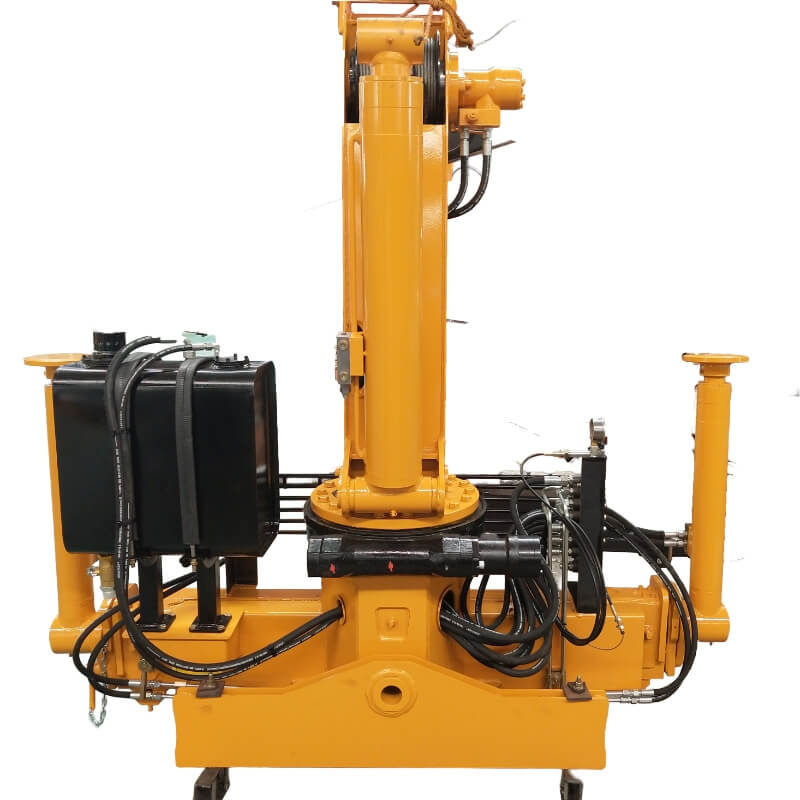
Maximum lifting capacities differ significantly between the two machines. Boom trucks generally cap out at lower tonnage limits. Most commercial boom trucks handle between 10 and 50 tons. Purpose-built truck cranes start around 40 tons and can exceed 100 tons. The structural limits of a commercial chassis restrict how much a boom truck can safely hoist.
Boom length and operating radius dictate the actual usable capacity on site. You must consult the load chart before any lift. A crane rated for 40 tons can only lift that weight at a very short radius with a retracted boom. As you extend the boom and increase the radius, the lifting capacity drops dramatically. A boom truck might lift 20 tons right next to the outriggers. That same truck might only lift 2,000 pounds at a 60-foot radius.
Operators must calculate deductions accurately. When reading a load chart, you must deduct the weight of the hook block, rigging, and any stowed jib from the gross capacity to find the net capacity. A boom truck might have a gross capacity of 30 tons, but after deducting a heavy block and spreader bar, the net capacity drops. You must also account for quadrants of operation. A crane might lift 20 tons over the rear, but only 10 tons over the side due to stability limits.
Stress distribution varies between the two architectures during maximum-capacity lifts. A commercial chassis flexes differently than a purpose-built crane frame. The purpose-built frame utilizes a massive, rigid box-section design. This absorbs the extreme torsional forces generated when swinging a heavy load. A commercial truck frame requires heavy sub-frame reinforcements to handle these same forces without bending.
Specification Category | Boom Truck Mounted Crane | Purpose-Built Truck Crane |
|---|---|---|
Typical Lift Capacity | 10 to 50 Tons | 40 to 120+ Tons |
Chassis Origin | Commercial Truck Assembly Line | Custom Engineered Carrier |
Primary Function | Lifting and Material Hauling | Dedicated Heavy Lifting |
Frame Design | Reinforced C-Channel | Rigid Box-Section |
Engine Configuration | Single Engine (PTO Driven) | Often Dual Engine (Upper/Lower) |
Mobilization efficiency strongly favors the commercial chassis. You can drive a boom truck at standard highway speeds. They merge into traffic easily. In most jurisdictions, standard boom trucks do not require special travel permits. You dispatch the truck, and it arrives at the site quickly. This rapid transit capability makes them perfect for contractors hitting multiple small sites in a single day.
Larger truck cranes face strict transit limitations. They weigh significantly more. This extra weight often restricts them to lower top speeds. You must plan specialized routing to avoid weight-restricted bridges and narrow roads. Oversized configurations frequently require pilot cars. Securing these permits and coordinating escorts delays mobilization and increases operational overhead.
Small job sites dictate equipment selection. A commercial truck chassis navigates tight urban environments easily. They turn corners like standard delivery trucks. You can position them in residential neighborhoods without blocking entire streets. The bulkier truck crane struggles in these confined spaces. Their longer wheelbases and wider bodies make tight turns difficult or impossible.
Tail swing presents another site constraint. Purpose-built cranes have massive counterweights that swing out beyond the outrigger footprint. Operators must barricade the swing radius to prevent crushing hazards. Boom trucks typically have zero or minimal tail swing, making them safer to operate near active traffic lanes or existing structures.
Tire size, axles, and suspension systems differ drastically. Boom trucks use standard commercial truck tires and air-ride or spring suspensions. They feature standard tandem or tridem rear axles. Purpose-built truck cranes require heavy-duty multi-axle configurations. They use larger, specialized tires designed to carry immense weight. These specialized axles distribute the load, but they reduce overall maneuverability.
Outrigger configurations determine the required ground space for safe stabilization. Boom trucks generally require a smaller outrigger spread. You can set them up in a standard driveway or a single lane of traffic. Truck cranes require a massive outrigger footprint. Their outriggers extend much further to provide stability for heavy lifts. You need a large, clear area to deploy them safely.
Equipment weight impacts ground bearing pressure. Both machines exert extreme pressure on the ground through their outriggers. Soft terrain presents a major hazard. You must use crane mats or engineered outrigger pads. The heavier the crane, the larger the mat required to distribute the load. Failing to manage ground bearing pressure leads to equipment sinking and tip-overs.
Boom trucks serve multiple roles on a job site. They act as both a delivery vehicle and a lifting device. A contractor can load HVAC units onto the flatbed at the warehouse. The operator drives to the commercial building. Upon arrival, the operator deploys the outriggers and hoists the units onto the roof. This eliminates the need to coordinate a separate flatbed delivery truck with a standalone crane.
Truck cranes operate as dedicated lifting machines. They possess zero payload capacity for material transport. The entire deck space is consumed by the crane turret, boom rest, and heavy counterweights. You must hire separate transport vehicles to deliver materials to the site. The truck crane simply arrives, sets up, and waits for the materials to be rigged.
Boom truck customization expands utility across different trades. You can pin various attachments to the boom tip.
Man baskets allow utility workers to perform elevated line maintenance safely.
Auger attachments enable contractors to drill holes for utility poles directly from the truck.
Wireline equipment supports specialized oilfield operations and well servicing.
Pallet forks transform the crane into a high-reach material handler for roofing supplies.
This versatility allows a single machine to perform multiple distinct jobs. Truck crane specialization focuses entirely on lifting reach and stability. Attachments primarily consist of jib extensions. These lattice structures pin to the main boom tip to provide additional reach. You also customize truck cranes by adding or removing modular counterweights. These configurations are designed strictly to enhance the load chart for specific heavy lifts.
Driver licensing depends on the Gross Vehicle Weight Rating (GVWR) and airbrake configurations. If a boom truck has a GVWR over 26,000 pounds, the driver needs a Commercial Driver’s License (CDL). Almost all purpose-built truck cranes require a Class A or Class B CDL due to their massive weight. If the vehicle utilizes airbrakes, the operator must possess the appropriate airbrake endorsement on their license.
Operating the lifting mechanism requires separate certifications. The Occupational Safety and Health Administration (OSHA) mandates strict training. Operators must hold certification from recognized bodies like the National Commission for the Certification of Crane Operators (NCCCO). This applies to both machines if they lift materials in construction applications. The certification type depends on the crane's specific configuration, such as fixed cab versus swing cab.
Transit compliance revolves around axle weights and bridge laws. The Federal Bridge Gross Weight Formula dictates how much weight a vehicle can carry based on the number of axles and the distance between them. Heavy truck cranes often push these limits. They require multiple drop axles to distribute the weight legally across the pavement. Standard boom trucks usually fall well within standard commercial weight limits.
Permitting creates administrative overhead. When a purpose-built truck crane exceeds legal weight or size limits, you must secure overweight or oversize permits. You must obtain these permits from every state and local municipality the crane travels through. This process takes time. Boom trucks bypass this overhead, allowing for immediate dispatch without waiting for permit approvals.
Requirement | Boom Truck Mounted Crane | Purpose-Built Truck Crane |
|---|---|---|
CDL Requirement | Required if GVWR > 26,000 lbs | Almost Always Required (Class A or B) |
Oversize/Overweight Permits | Rarely Required | Frequently Required |
Pilot Car Escorts | Not Required | Required for Large Configurations |
NCCCO Certification | Required for Construction Lifts | Required for Construction Lifts |
Bringing too much crane to a site wastes resources. Dispatching a heavy-duty truck crane when a smaller machine would suffice drains your operational budget. You pay higher mobilization costs. You burn more fuel. You also create unnecessary site access issues. A massive crane might not fit into the designated lift zone, forcing you to re-engineer the entire site layout.
Under-speccing creates severe safety hazards. Pushing a boom truck beyond its load chart limits invites disaster. The machine will suffer structural fatigue. In worst-case scenarios, the crane will tip over or the boom will collapse. This results in property damage, severe injuries, and immediate OSHA violations.
Mitigation requires rigorous pre-lift planning. You must know the exact weight of the load and the required radius before selecting equipment. Utilize 3D lift planning software to simulate the operation. Consult the load charts meticulously. Never guess the weight of a load. Always build in a safety margin to account for wind and dynamic loading.
Ground failure represents a massive risk. Equipment outriggers exert immense point loads. If the ground is unstable, the outrigger will punch through the surface. The crane will immediately lose its level stance. Even a slight degree out of level drastically reduces the crane's structural capacity. This leads to sudden tip-overs.
You must manage ground conditions proactively. Soil types dictate bearing capacity. Clay soils hold moisture and lose bearing capacity quickly. Compacted gravel provides a solid base. Operators must evaluate the soil type before deploying outriggers. You calculate outrigger pad sizing by dividing the maximum outrigger force by the allowable soil bearing pressure to find the required pad area.
Mandate geotechnical surveys for heavy lifts on unfamiliar terrain. You must know what lies beneath the topsoil. Standardize the use of engineered outrigger pads. Never rely on scrap wood. Use properly sized, engineered mats to distribute the outrigger force safely across a wider surface area, regardless of the equipment chosen.
The choice between these two machines hinges entirely on your specific operational demands. You must weigh the ratio of required lifting capacity against the need for mobility and material hauling. One machine prioritizes heavy static lifting, while the other prioritizes agility and multi-role utility.
Choose a boom truck for high-frequency, lower-tonnage lifts. They are the clear winner when you need rapid site-to-site transit. If your project requires material delivery alongside lifting capabilities, this is your machine. They excel in small job sites with tight access.
Choose a purpose-built truck crane for dedicated, high-tonnage lifts. When the load is massive and the reach is extreme, you need a specialized carrier. These machines are necessary when the equipment will remain stationary on a large site for extended periods.
Take these immediate next steps to ensure successful deployment:
Audit your upcoming project load weights and required lifting radii accurately.
Assess site access constraints, including gate widths, overhead obstacles, and ground conditions.
Consult with a structural engineer to review specific load charts against your lift plan.
Verify that your operators hold the correct CDL endorsements and NCCCO certifications for the selected equipment.
A: Most commercial boom trucks handle capacities ranging from 10 to 50 tons. Some specialized heavy-duty models can reach up to 80 tons. However, they generally cap out much lower than dedicated purpose-built truck cranes, which routinely exceed 100-ton capacities for heavy infrastructure projects.
A: Yes, if the vehicle's Gross Vehicle Weight Rating (GVWR) exceeds 26,000 pounds, you need a Commercial Driver’s License (CDL). Additionally, if the truck is equipped with airbrakes, the driver must have an airbrake endorsement on their license to operate it legally on public roads.
A: Yes. This is a primary advantage of the commercial chassis design. The integration retains usable flatbed space. Contractors can load materials at a yard, transport them to the job site, and use the onboard crane to hoist those same materials into place.
A: "Mobile crane" is a broad umbrella term that includes any crane capable of moving under its own power. A truck crane is a specific sub-category of mobile crane. It features a purpose-built lower carrier designed specifically for highway travel and heavy lifting.
A: A boom truck uses a standard commercial highway truck chassis with standard suspension. An all-terrain (AT) crane is a purpose-built machine featuring multi-axle steering, large off-road tires, and specialized hydro-pneumatic suspension designed to navigate rough, unpaved job sites while still allowing highway travel.
A: Yes. OSHA classifies them under the Cranes and Derricks in Construction standard (29 CFR 1926 Subpart CC) when used for construction activities. Operators must hold recognized certifications, such as those from the NCCCO, to legally operate the lifting mechanism on a job site.
A: Boom trucks generally have a smaller outrigger spread, allowing them to set up in confined spaces like single traffic lanes. Purpose-built truck cranes require a much wider outrigger footprint to stabilize heavier loads, demanding significantly more clear ground space for safe deployment.


