
Views: 0 Author: Site Editor Publish Time: 2026-03-10 Origin: Site
When choosing the right crane for your project, it’s essential to understand the differences between a hydraulic truck crane and a boom truck. Each crane type offers unique advantages based on the nature of the job, load requirements, site conditions, and budget constraints. In this article, we’ll explore the key features of both crane types, compare their capabilities, and help you make the best decision for your lifting needs.
A hydraulic truck crane is a powerful lifting machine mounted on a truck chassis, utilizing a hydraulic system for its lifting and extension operations. The hydraulic system generates the force necessary for lifting heavy loads and extending the crane’s boom to reach greater heights or longer distances. These cranes are commonly used in large-scale projects that require both high lifting capacities and long reach.
Key features include:
Hydraulic power system: Provides smooth and efficient lifting.
Boom design: Often telescopic, offering significant extension for long-distance and high-altitude lifting.
Stability: Equipped with outriggers for additional support to prevent tipping during heavy lifts.
Higher Load Capacity: Hydraulic truck cranes are designed to handle heavy loads, often in the range of 50 tons to over 100 tons. They are ideal for industrial and construction projects that involve lifting heavy machinery, building materials, or large equipment.
Extended Reach: Thanks to their telescoping booms, hydraulic truck cranes can reach high elevations, making them perfect for tasks like lifting materials to the top of buildings or installing large infrastructure components.
Versatility: These cranes can perform a wide range of tasks, from lifting large equipment to handling construction material in challenging environments.
Hydraulic truck cranes are widely used in:
Large construction projects (high-rise building construction, infrastructure installation)
Heavy machinery lifting (transformers, generators, large components)
Energy industry (lifting turbines, equipment for power plants)
Transport and logistics (moving oversized cargo)
A boom truck is another type of truck mounted crane, but it differs significantly from a hydraulic truck crane in its design and function. Boom trucks feature a fixed or telescopic boom that can extend, but they typically do not have the same hydraulic lifting power or long reach as hydraulic truck cranes.
Key features of boom trucks:
Boom design: Either fixed or telescopic, the boom provides a more straightforward lifting mechanism.
Simpler construction: Boom trucks are generally simpler and lighter than hydraulic truck cranes.
Lower cost: Due to fewer complex systems and lower lifting capacities, boom trucks are more affordable.
Lower Operating Cost: Boom trucks are significantly cheaper to operate compared to hydraulic truck cranes, especially for lighter lifting tasks.
Quick Deployment: They are easier and quicker to set up than hydraulic truck cranes, making them ideal for jobs that require fast deployment.
Simplicity: Boom trucks have simpler designs, making them easier to maintain and operate. This simplicity translates to fewer breakdowns and lower repair costs.
Boom trucks are typically used in:
Material handling (transporting construction materials)
Light construction tasks (installation of equipment, small-scale lifting)
Logistics (loading/unloading goods, handling medium to light loads)
Transportation (moving equipment or cargo over short distances)
Now that we understand the features and advantages of both crane types, it’s essential to compare their key differences to help you make the right decision for your project.
Feature | Hydraulic Truck Crane | Boom Truck |
Load Capacity | 50–100+ tons | 2–50 tons |
Reach | Extended reach (telescopic boom) | Moderate reach (fixed or telescopic boom) |
Cost | Higher cost (more complex system) | Lower cost (simpler design) |
Mobility | Highly mobile, ideal for large-scale sites | Quick deployment, ideal for confined spaces |
Flexibility | High flexibility, handles heavy and complex lifting tasks | Best for lighter, smaller lifting jobs |
Applications | Large construction, industrial machinery lifting | Light construction, material handling, logistics |
Stability | High stability with outriggers | Stability varies, generally suitable for lighter loads |
Hydraulic Truck Cranes: Hydraulic truck cranes are designed to lift heavy loads ranging from 50 tons to over 100 tons. They can lift large machinery, construction equipment, and materials over great distances and heights. This makes them perfect for large-scale construction projects or lifting tasks that require both height and weight.
Boom Trucks: Boom trucks are typically limited to smaller loads, ranging from 2 tons to 50 tons. They are ideal for lighter tasks where high reach is not required, but mobility and fast setup are important.
Hydraulic Truck Cranes: Due to their complex hydraulic systems and higher lifting capacities, hydraulic truck cranes come with a higher price tag. They are generally more expensive to purchase, operate, and maintain.
Boom Trucks: Boom trucks are much more affordable than hydraulic truck cranes. They are simpler, cost-effective, and have lower operating costs, making them an excellent choice for smaller businesses or light lifting tasks.
Hydraulic Truck Cranes: These cranes are incredibly flexible and can handle a wide variety of tasks. They are more versatile in terms of the range of jobs they can perform, making them suitable for complex and large-scale lifting projects. However, they require a larger setup space and can be slower to deploy.
Boom Trucks: Boom trucks are easier and quicker to set up, making them ideal for tight spaces and confined work environments. They may not offer the same lifting power or range as hydraulic truck cranes, but they are highly mobile and efficient for light lifting tasks.
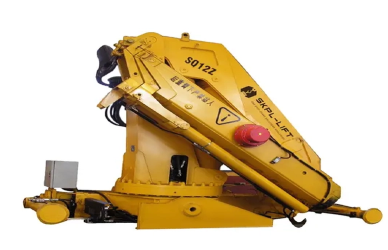
When deciding between a hydraulic truck crane and a boom truck, there are several key considerations to keep in mind:
For large-scale construction, heavy machinery lifting, or high-rise work, a hydraulic truck crane is likely the better choice due to its superior lifting capacity, extended reach, and versatility.
For light construction, material handling, or logistics tasks where cost and quick setup are more important, a boom truck may be the ideal solution.
Hydraulic truck cranes tend to be more expensive, both in terms of initial cost and maintenance. If your budget allows for the investment in a high-capacity crane, a hydraulic truck crane will deliver high performance and efficiency.
Boom trucks are more affordable, making them a cost-effective solution for lighter tasks. If your project involves lighter lifts, a boom truck is a practical and budget-friendly option.
If you need to work in tight spaces or need to quickly deploy a crane, a boom truck will be more suitable due to its compact design and ease of setup.
If the project requires large-scale lifting, high reach, and stable operation, a hydraulic truck crane will be the better choice for handling challenging site conditions.
A hydraulic truck crane is highly beneficial for heavy-duty lifting due to its impressive load capacity and extended reach. These cranes can handle large-scale construction projects, such as lifting heavy equipment and materials at significant heights or distances. The hydraulic system provides smooth and precise control, making it suitable for more complex tasks where precision and strength are required.
Boom trucks are generally not built for heavy-duty lifting and are better suited for lighter tasks. They typically have lower lifting capacities compared to hydraulic truck cranes, and are ideal for applications like material handling, equipment installation, or jobs where high maneuverability and a compact design are essential. For tasks that involve lifting large weights or working in more demanding environments, hydraulic truck cranes are typically the preferred choice.
Yes, boom trucks are typically more affordable than hydraulic truck cranes. This is because boom trucks have a simpler design and are often used for lighter tasks. Their lower lifting capacities and ease of operation contribute to their reduced cost, making them an attractive option for companies looking to handle less demanding jobs without investing in more expensive equipment.
Boom trucks are better suited for confined spaces. Due to their compact size and relatively faster setup, they are ideal for working in environments where space is limited and maneuverability is crucial. Their smaller footprint makes them more flexible when navigating tight corners or cramped areas, such as urban construction sites, parking lots, or sites with limited access points. Hydraulic truck cranes, while powerful, are larger and typically require more space for setup and operation.
Both hydraulic truck cranes and boom trucks have their place in the construction and logistics industries, but choosing the right one depends on the specific needs of your project. Hydraulic truck cranes offer high lifting capacity, extended reach, and versatility, making them ideal for heavy-duty tasks. On the other hand, boom trucks are cost-effective, quick to deploy, and suited for lighter lifting tasks in confined spaces.
By carefully evaluating your project requirements, budget, and site conditions, you can make the best choice between these two crane types. Whether you need the heavy lifting power of a hydraulic truck crane or the mobility and affordability of a boom truck, understanding their differences will ensure you select the right crane for the job.


