Views: 0 Author: Site Editor Publish Time: 2026-08-12 Origin: Site
Skipping daily inspections on heavy lifting equipment does not just risk catastrophic failure. It directly drives up unplanned downtime, operational friction, and severe legal liability across your job sites. Regulatory frameworks, including OSHA 1926.1412 and ASME B30.5, strictly mandate comprehensive shift checks before you lift any load. These baseline expectations exist to protect operators, secure work environments, and prevent devastating accidents. When organizations ignore these daily routines, they inevitably face emergency repairs, stalled projects, and massive compliance fines.
This guide helps fleet managers and operators evaluate how to standardize maintenance protocols effectively. You will learn to reduce daily operational friction, identify minor issues early, and select highly reliable equipment or service partners. We outline exactly what components demand daily attention and how modern digital tools can seamlessly streamline your compliance reporting. Fleet managers face constant pressure to optimize asset utilization. Establishing a reliable daily inspection routine becomes a strategic advantage. It empowers operators to take ownership of their machinery. It gives management clear visibility into fleet health.
Daily inspections must focus on four critical zones: structural integrity, hydraulics, load-handling hardware, and safety systems.
The primary ROI of strict daily maintenance is the prevention of compound failures (e.g., a minor hydraulic weep becoming a full pump failure).
Digital tracking systems outperform paper logs by preventing "pencil-whipping" and creating verifiable audit trails for fleet compliance.
Evaluating a crane vendor or maintenance partner requires looking past upfront costs to assess parts availability, OEM support, and field-service responsiveness.
Reactive maintenance brings massive hidden costs to any organization. You face emergency repairs, halted job sites, and heavy compliance fines. A reactive approach destroys daily productivity. It forces entire crews to wait while mechanics troubleshoot preventable failures. Operators hold strict legal and safety responsibilities. Before operating any Mobile Crane, they must verify its safe condition. A successful daily inspection program takes under 15 minutes. It yields highly actionable data. It consistently reduces month-over-month unplanned downtime. Managers must build systems helping operators succeed. Quick checks protect the bottom line significantly.
Consider the cascading effects of a single unexpected breakdown. First, the immediate lifting operation stops completely. Second, dependent trades on the job site halt their work. Third, you pay premium rates for emergency mechanic dispatches. Finally, prolonged delays damage your reputation among key clients. A proactive daily inspection program eliminates most of these scenarios. It catches minor issues early. A small hydraulic weep costs very little to fix. A blown pump costs thousands in parts and labor. The return on investment becomes obvious immediately.
Furthermore, liability remains a massive concern. If an uninspected crane causes an accident, regulatory agencies investigate aggressively. They will demand your daily inspection logs. Missing logs lead to willful violation citations. These fines cripple operational budgets. You protect your business by enforcing strict daily routines. Train operators to view this 15-minute check as the most critical part of their shift. Avoid the common mistake of treating daily inspections as a mere paperwork exercise. It remains a vital safety protocol.
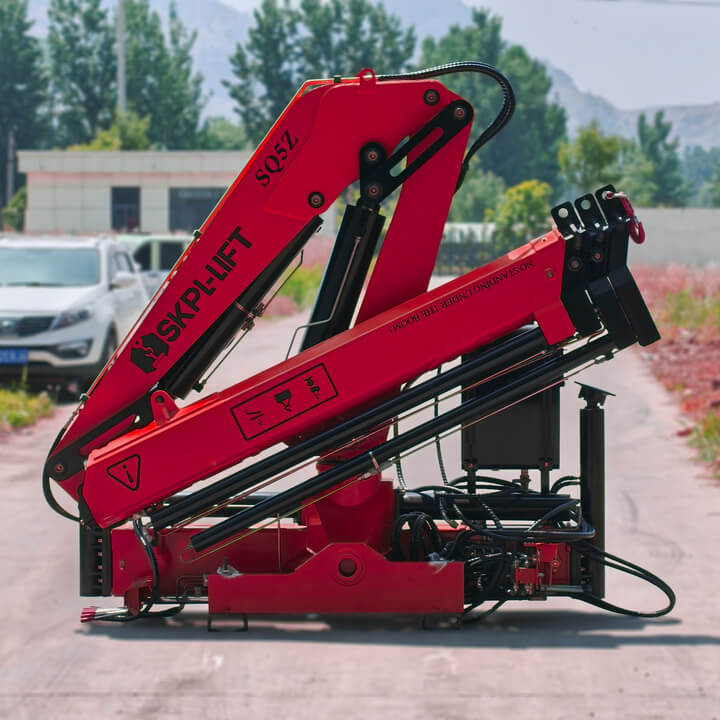
A comprehensive routine ensures every Truck Mounted Crane operates safely. You must inspect four primary zones daily. Operators must follow a strict, repeatable path around the equipment.
The chassis and structural components bear immense physical stress. Inspect the sub-frame thoroughly every morning. Look closely for weld cracks. Check for metal deformation. Ensure all hardware on the boom remains tight. Verify outrigger function carefully. Examine outrigger pads for extreme wear. Check structural stress points constantly. Flaking paint often indicates underlying metal fatigue. You must investigate any unusual bending immediately. Outriggers provide critical stability during heavy lifts. If an outrigger fails, the entire unit tips over.
Test the outrigger controls for smooth deployment. Verify the locking pins engage securely. Examine the outrigger floats or pads carefully. They must remain flat and undamaged. Check the surrounding ground condition as well. Soft soil compromises even the best outriggers. Look at the mounting bolts connecting the crane to the truck frame. Loose bolts allow dangerous shifting during a lift. Operators must walk around the entire vehicle systematically. They should look for loose debris or tools left on the deck. Dirt and thick grease easily hide hairline fractures. Operators must wipe down critical joints before inspecting them.
Hydraulics power the heavy lifting capabilities of your equipment. Inspect hoses, fittings, and cylinders closely. Look for leaks, abrasions, or fluid weeping. Verify hydraulic fluid levels before operation. Assess the fluid for contamination. Milky fluid indicates severe water ingress. Dark fluid suggests burnt oil or internal debris. A minor leak can destroy a costly pump quickly. Test the Power Take-Off (PTO) engagement. Ensure it engages without grinding or excessive vibration. Look for damaged hose casings.
A frayed hose under high pressure poses a lethal injection hazard. Never use your bare hands to check for hydraulic leaks. Use a piece of cardboard instead. High-pressure fluid easily pierces human skin. Inspect the hydraulic reservoir breathers. They must remain clean to allow proper airflow. Check the return filters for any restricted flow indicators. Listen to the hydraulic pump during operation. Unusual whining noises indicate cavitation or low fluid. Address these sounds immediately to prevent pump destruction. Always park the equipment on level ground before checking fluid levels. This ensures an accurate reading every time.
Wire ropes demand strict visual checks before every shift. Look for broken wires and severe kinking. Check for crushing or unstranding. Inspect hook latches thoroughly. Ensure they snap back securely. Look for physical deformation on the hook itself. Monitor wear on sheaves and blocks closely. A stretched hook indicates a previous dangerous overload. Never use a hook lacking a functional safety latch. Unstranding compromises the core strength of the wire rope. Any localized wear requires immediate professional assessment.
Differentiate between crown breaks and valley breaks. Valley breaks indicate severe internal core damage. You must replace the rope if you spot valley breaks. Check the drum spooling closely. The wire rope must spool evenly without crossing over itself. Improper spooling crushes the wire rope rapidly. Lubrication also matters significantly. A dry wire rope rusts and degrades quickly. Ensure adequate lubrication remains present on the entire length. Operators often glance at the hook but ignore the full length of the wire rope wound on the drum. This remains a dangerous common mistake.
You must test all safety devices daily without exception. Test the Anti-Two-Block (A2B) devices first. Verify the Load Moment Indicators (LMI) accurately. Check the boom angle indicators. Cycle all control levers without a load. Ensure smooth return-to-neutral action. Confirm the absolute absence of binding. The A2B system prevents the hook block from colliding with the boom tip. If this fails, the wire rope can snap instantly. LMI systems calculate safe lifting capacities based on boom extension. Faulty sensors here lead directly to catastrophic tipping accidents.
Verify the horn and backup alarms function loudly. Communication remains vital on noisy job sites. Check the fire extinguisher inside the cab. It must remain fully charged and accessible. Inspect all glass and mirrors for clear visibility. Operators cannot lift safely if they cannot see the load. Test the emergency stop buttons. They must kill the engine or hydraulic flow instantly. Always test controls slowly at first to ensure predictable movement.
Real-world challenges cause daily checks to fail frequently. Rushed operators often skip vital inspection steps. Adverse weather conditions discourage thorough morning inspections. A lack of management accountability breeds dangerous complacency. Operators often note symptoms but ignore root causes. They might report sluggish operational controls. However, they fail to trigger the proper maintenance workflow. This delays necessary repairs significantly. Rushed mornings create dangerous blind spots. Operators focus purely on getting the engine running. They ignore the essential visual walk-around. Management must schedule dedicated time for these checks. If you expect a 15-minute check, pay the operator for those 15 minutes.
Environmental variables demand localized adjustments to your protocols. Standard OEM checklists often fall short in extreme conditions.
Marine salt accelerates severe rust and corrosion on exposed metal.
Freezing temperatures degrade hydraulic seal flexibility and slow fluid flow.
Heavy dust clogs essential intake filters and ruins cylinder rods.
Deep mud masks structural damage and contaminates outrigger mechanisms.
Extreme heat thins hydraulic oil dangerously, reducing lifting capacity.
You must adjust checklists for these extreme conditions. In freezing rain, operators tend to rush outside checks. Managers must provide adequate time and proper gear. They must enforce the inspection regardless of weather. Torrential rain washes away essential lubrication from wire ropes. It also obscures visibility of structural cracks. Sand causes severe abrasion on cylinder rods. Adapt your daily checklist to match your local operating environment perfectly.
Traditional paper inspection logs fall behind modern digital solutions. Paper logs create isolated and inaccessible data silos. Operators sometimes fill them out retrospectively at day's end. This dangerous "pencil-whipping" ruins critical data integrity. Digital forms require real-time, timestamped entries. They mandate photo uploads for any identified defects. They send instant failure alerts directly to mechanics. Digital systems prevent operators from skipping fields. They cannot submit the form until they check every box. This enforces strict accountability.
Digital defect reporting automatically feeds scheduled maintenance cycles. This integrates daily checks into monthly preventative maintenance (PM) effortlessly. Mechanics no longer decipher messy handwriting. They see a clear photograph of the exact frayed hose. This speeds up parts ordering and reduces repair times. Digital records provide robust legal protection. If an incident occurs, you can prove the operator completed the inspection. You possess timestamped photographic evidence of the equipment's condition.
Digital platforms often feature powerful API integrations. They connect directly to your enterprise resource planning (ERP) software. This creates a unified dashboard for fleet health. Mechanics order parts proactively based on daily defect trends.
Comparison Chart: Traditional Paper Logs vs. Digital Fleet Management
Feature Category | Traditional Paper Logs | Digital Fleet Systems |
|---|---|---|
Data Entry & Integrity | Prone to retrospective filling and manual errors. | Timestamped, GPS-verified, and highly accurate. |
Defect Evidence | Relies on brief written descriptions from operators. | Mandates high-resolution photo uploads for clarity. |
Maintenance Alerts | Delayed until paper reaches the back office. | Instant push notifications sent to mechanics. |
PM Integration | Requires manual data transfer and physical filing. | Automatically feeds into PM scheduling software. |
Selecting a third-party service provider requires careful shortlisting logic. Evaluating a new crane purchase involves similar rigorous assessment. You must look past upfront costs entirely. Assess their true operational support and long-term capabilities. Do they stock proprietary replacement parts locally? Can they dispatch certified technicians to remote job sites quickly? Are their inspectors certified to sign off on annual OSHA requirements? A cheap maintenance contract costs more during a breakdown. If you wait weeks for a specialized valve, you lose money.
Strong partners guarantee rapid parts availability. They offer scalable field service for growing fleets. They provide deep compliance expertise to protect your business. Do they offer strict Service Level Agreements (SLAs) for field dispatch? Ask about their approach to OEM versus aftermarket parts. OEM parts guarantee correct fitment and preserve warranties. Aftermarket parts might save money but risk premature failure. Ask to see their technicians' certification credentials. Mobile crane repair requires highly specialized knowledge. A general diesel mechanic cannot certify load moment indicators. Strong partners invest heavily in continuous technician training.
Key Evaluation Dimensions for Maintenance Partners
Evaluation Dimension | Critical Question to Ask | Business Impact |
|---|---|---|
Parts Availability | Do you stock proprietary OEM parts locally? | Minimizes waiting times and keeps assets operational. |
Field Service Scalability | Can you dispatch technicians to remote sites? | Prevents expensive towing and reduces field downtime. |
Compliance Expertise | Are your inspectors fully OSHA/ASME certified? | Guarantees legal compliance and prevents costly fines. |
Advise your team to audit current maintenance contracts today. Compare these agreements against your actual downtime metrics. If your vendor consistently fails to deliver parts, find another partner. Your service partner directly influences your operational uptime and safety compliance.
Daily inspections form the foundational layer of robust asset management. While operators physically perform these checks, management holds ultimate responsibility. Leaders must build a frictionless reporting system ensuring compliance. An effective routine catches compound failures before they happen. It reduces operational friction significantly.
Audit your current daily inspection process for speed and accuracy today.
Transition from paper logs to digital fleet management platforms immediately.
Download a comprehensive daily and monthly inspection template for your crew.
Request a professional fleet maintenance audit from certified industry experts.
Contact trusted sales teams for reliable parts and service agreements.
Protect your crew, secure your equipment, and maximize your uptime by mastering daily maintenance.
A: A standardized daily inspection typically takes 10 to 15 minutes. Efficiency improves significantly when operators use digital fleet management tools instead of paper forms.
A: Safety standards define this individual as a "competent person." This is usually the trained operator checking the equipment before their shift begins.
A: Daily maintenance involves visual and operational testing to spot immediate hazards. Periodic inspections require deep mechanical tear-downs and formal certifications by qualified mechanics.
A: Yes. Extreme conditions like heavy salt, thick mud, or freezing cold require specialized daily lubrication checks and intense anti-corrosion monitoring.