Views: 0 Author: Site Editor Publish Time: 2026-07-04 Origin: Site
Choosing between telescopic and knuckle boom cranes is not about personal preference. It is a rigid operational math problem. You must calculate payload loss, site footprints, and maintenance overheads carefully. Procuring the wrong lifting equipment damages your bottom line. You will face either wasted reach capacity or structural deadweight. Both scenarios diminish your day-to-day return on investment. If you make the wrong choice, your fleet loses efficiency.
We will help you navigate this complex decision. You must evaluate these two dominant hydraulic lifting mechanisms based on real factors. Look closely at actual site constraints, operator expertise, and lifecycle operating costs. We outline the fundamental mechanical differences below. We also provide a practical matrix to guide your fleet procurement strategy. Make sure you align your hardware choices precisely against your typical job site realities.
Reach vs. Flexibility: Telescopic booms (stiff booms) excel in linear, high-angle reach with simple operation; knuckle booms excel in tight-clearance, heavy-duty articulation.
Payload Economics: Knuckle booms typically have a lower deadweight, preserving more of the truck’s legal payload capacity.
Maintenance Reality: The complex hydraulic routing of articulating cranes increases maintenance risk compared to the straightforward cylinder mechanisms of a stiff boom.
Sourcing Strategy: Direct evaluation of a telescopic crane vs knuckle crane factory requires comparing their chassis integration engineering, not just lifting charts.
You cannot make an informed fleet decision without understanding basic engineering. Each crane type relies on fundamentally different lifting mechanics. These structural choices dictate how they handle weight and spatial limits.
The telescopic boom crane uses a very straightforward design. It extends linearly using internal hydraulic cylinders. The sections slide outward like a spyglass. It relies heavily on a winch-and-cable system for vertical load placement. This cable setup allows you to drop loads down deep shafts.
These machines also feature continuous 360-degree rotation capabilities. The boom structure remains stiff and rigid. It does not bend or fold. You simply raise the boom angle and extend the sections. You then use the winch to hoist your materials.
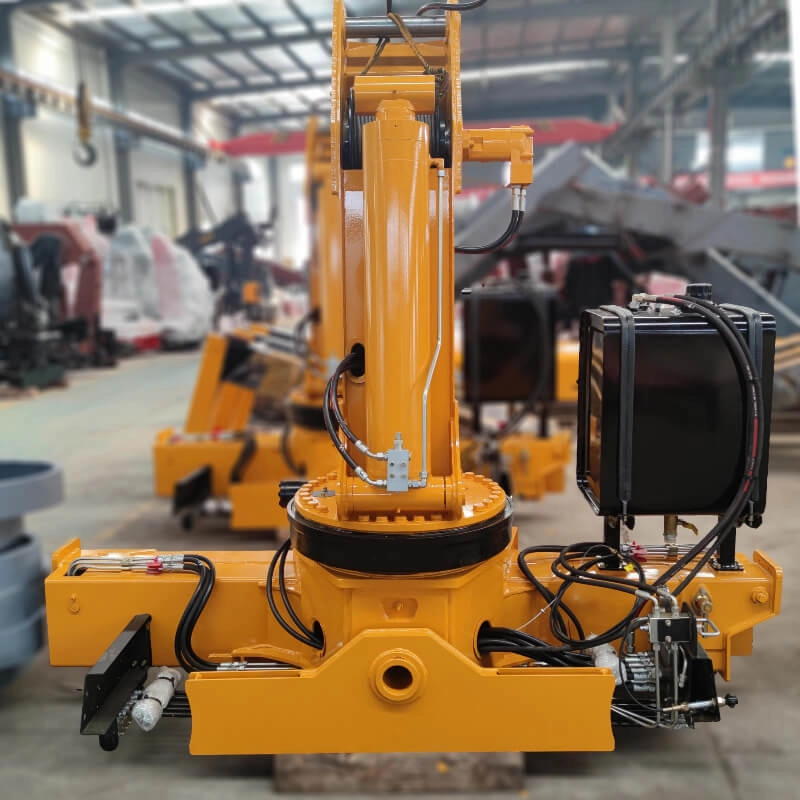
The knuckle boom crane operates much differently. It features a folding hinge mechanism. This design closely mimics a human finger. The primary and secondary arms bend at distinct joints. This articulation provides incredible flexibility.
It provides direct hydraulic lift at the boom tip. You do not need a winch for standard lifting tasks. However, winch add-ons do exist for specialized jobs. The design stows compactly behind the cab or at the rear of the bed. This leaves the deck mostly open for cargo.
Mechanical Feature | Telescopic Boom | Knuckle Boom |
|---|---|---|
Extension Method | Linear sliding cylinders | Articulating hinges (folding) |
Primary Lifting Tool | Winch and cable | Direct boom tip hook |
Stowing Profile | Long, parallel to truck bed | Compact, folded behind cab/rear |
Rotation Radius | Continuous 360 degrees | Typically limited to 400-420 degrees |
Matching your machine to your site is critical. A stiff boom dominates specific environments. It thrives in open spaces requiring immense height or depth.
Ideal Use Cases: You will want this crane for high-wall construction sites. It works perfectly for deep utility trenching. It excels at long-distance material placement. Roofers and well-drillers rely heavily on this configuration.
Simplicity: These cranes are highly intuitive for operators. Standard winch controls have a very low barrier to entry. New operators learn the joystick movements quickly.
Suspended Loads: The cable mechanism allows for precise vertical dropping. You can lower loads over walls or down elevator shafts. You achieve this without moving the main boom arm.
Overhead Clearance: The stiff boom requires significant vertical space to deploy. It raises upward before extending outward. It is completely unsuitable for indoor facilities or low-clearance sites.
Bed Space: The long boom arm must stow linearly over the truck bed. This configuration often restricts oversized cargo. You cannot easily stack tall pallets directly beneath the stowed boom.
What to watch out for: Cable wind shear. High winds can cause a suspended load to swing dangerously. Operators must secure taglines to control the materials. Failure to do so risks damaging nearby structures.
Articulating cranes solve complex spatial puzzles. They bend around obstacles safely. This makes them highly effective in crowded urban landscapes.
Ideal Use Cases: These units dominate urban delivery routes. They are standard in forestry and logging. Tight residential sites and heavy machinery transport also depend heavily on them.
Spatial Efficiency: The machine folds compactly into itself. This leaves the majority of the flatbed open. You can maximize your revenue-generating payload on every single trip.
Horizontal Precision: The articulating joints allow you to snake materials into awkward spaces. You can maneuver loads directly into doorways. You can safely slip materials under low hanging powerlines.
Complexity: There is a steep operator learning curve. You must manage multiple articulating points smoothly. It takes hundreds of hours to master fluid, simultaneous joint movements.
Vulnerability: The folding joints expose hydraulic lines. These hinge points face intense friction. They increase the risk of wear, tear, and fluid leaks. You must maintain them meticulously to prevent downtime.
Best Practice: Always conduct a pre-shift visual inspection of the hinge pins. Look for hydraulic weeping near the knuckle joints. Catching a small leak early saves thousands in repair costs.
Your hardware choice directly impacts your profitability. Every kilogram of steel you add to the chassis reduces your legal cargo capacity. You must understand how deadweight affects your bottom line.
Gross Vehicle Mass dictates the maximum legal weight of your fully loaded truck. The crane structure itself counts against this limit. If your lifting equipment is too heavy, your payload capacity drops drastically. You will earn less money per delivery route.
Knuckle booms generally offer a better strength-to-weight ratio. They eliminate the heavy winch and massive internal cylinders found in stiff booms. This lighter deadweight preserves more of the truck’s legal payload capacity. Transport businesses prefer them because they carry more billable cargo per trip. When evaluating a hydraulic boom truck, always calculate the exact payload retention percentage before signing a purchase order.
You must weigh initial acquisition costs against lifecycle maintenance overhead. Capital Expenditure (CAPEX) covers your initial purchase price and standard warranty coverages. Operating Expenses (OPEX) cover daily fuel, hydraulic fluids, and mechanical repairs.
Telescopic units generally boast lower lifecycle maintenance costs. They have far fewer moving joints. Their linear hydraulics remain enclosed inside the steel booms. They suffer less environmental exposure. Conversely, articulating units demand stricter inspection protocols. Their exposed hinge pins and complex hydraulic routing require frequent servicing. You must budget for higher OPEX when operating articulating machinery.
Buying lifting equipment requires more than reading a brochure. You are buying an integrated vehicle system. The engineering behind the installation matters just as much as the crane itself.
Purchasing isn't just about the standalone equipment. It is about chassis integration engineering. The manufacturer must pair the Power Take-Off (PTO) flawlessly with your truck's transmission. They must design a custom subframe to distribute lifting stress. Working directly with a telescopic crane vs knuckle crane factory ensures proper structural mating. A poor subframe design will inevitably crack your truck's chassis under heavy loads.
You must evaluate manufacturer standards rigorously. Look for ISO, CE, or ANSI certifications. For instance, ANSI B30.5 sets strict guidelines for load charts and stability testing in the United States. Ensure the factory provides verifiable load-chart integrity. The factory must conduct physical tilt-table testing to guarantee the outriggers provide adequate stability.
Do not ignore post-purchase logistics. Assess the factory lead times for replacement hydraulic components. Find out how quickly they ship proprietary wear parts. A broken seal can ground your entire operation. Choose a factory partner offering rapid overnight parts dispatch. Every truck mounted boom crane demands reliable, fast-acting technical support.
We created a practical decision matrix to simplify your procurement process. Review your primary logistical bottlenecks and match them against the criteria below.
Your primary barrier is height or depth. You frequently drop roofing materials over tall parapets. You regularly lower well-pumping equipment into narrow holes.
You employ a rotating roster of operators. You need standard, easy-to-learn controls. The joystick-and-winch system requires minimal training time.
You operate mostly in wide-open environments. Overhead powerlines and tight urban alleys rarely restrict your daily job sites.
You prefer lower ongoing maintenance overhead. You want to deal with fewer exposed hydraulic hoses and hinge pins.
Your primary barrier is site access and overhead obstacles. You must navigate tight residential driveways and low-clearance indoor facilities.
Maximizing truck bed space is your core revenue driver. You need every available inch of the deck for daily material delivery.
You require precise horizontal load placement. You frequently slide heavy machinery or drywall stacks straight into ground-floor doorways.
You employ dedicated, highly skilled operators. Your crew possesses the experience required to manipulate multiple articulating joints smoothly and safely.
Neither lifting mechanism is objectively superior to the other. Superiority is entirely dictated by the specific logistical bottlenecks of the end-user. You must match the engineering to your daily operational reality.
We advise you to audit your last six months of site operations. Quantify how often your crew was limited by maximum reach versus spatial constraints. Did you lose jobs because you couldn't reach high enough? Did you turn away loads because the truck bed was too crowded?
Your answers will reveal the exact equipment profile you need. Consult directly with engineering teams to run a comprehensive load-chart and payload analysis based on your desired chassis specifications. Let the data drive your fleet expansion.
A: Yes, you can add a winch and jib attachment to many articulating models. This provides cable-dropping capabilities similar to stiff booms. However, adding a winch increases the deadweight at the boom tip. This extra weight heavily reduces your overall lifting capacity on the load chart.
A: Articulating units generally cost more to maintain over their lifecycle. Their folding design relies on multiple exposed hinge pins and complex hydraulic hose routing. These components face significant daily friction. Stiff booms enclose their hydraulic cylinders internally, resulting in fewer exposed wear points.
A: This depends strictly on the combined Gross Vehicle Weight Rating (GVWR) of your chassis, not the crane type itself. In many jurisdictions, if the total vehicle weight exceeds 26,000 pounds, the driver must hold a valid CDL. Always check your local transportation authority regulations.
A: Weather impacts them differently. Stiff booms rely on suspended cables, making their loads highly vulnerable to wind shear and swinging. You must use taglines in breezy conditions. Articulating units hold loads rigidly at the boom tip, offering better control and stability during moderate wind events.